With the changing work landscape, Human Resource Analytics is revolutionizing how workplace judgments are made.
It is assisting organizations in converting workforce data into practical insights and making strategic choices that foster the creation of high-performing teams. The analytics is additionally enabling enterprises to enhance hiring, decrease turnover, bolster employee engagement, and facilitate long-term business growth.
A study conducted by Gallup indicates that firms implementing data-driven engagement strategies experience 65% less absenteeism and 21% greater profitability.
This clearly demonstrates how employing data analytics can substantially elevate workforce engagement and directly contribute to improved business results.
Now, let’s first explore what HR analytics actually entails.
What is Human Resource Analytics?
Human resource analytics refers to a concept that outlines a procedure in the HR department involving the collection, organization, and examination of workforce data.
By utilizing this data, organizations can gain workforce insights and make decisions that boost employee engagement, productivity, and enhance overall organizational performance. This data can also be leveraged to assess the impact of various HR metrics to refine workforce planning.
HR Analytics vs People Analytics
Though the terms human resource analytics and people analytics are often used synonymously, there exists a nuanced distinction.
HR analytics arise from information stored within human resources and aim to optimize HR functionalities. In contrast, people analytics extends beyond HR to draw from other organizational sources, such as customer data, marketing, and finance to tackle a wider array of business challenges.
Importance of Human Resource Analytics
Human resource analytics allows organizations to distinctly recognize which HR strategies yield significant outcomes. It provides professionals with the insights necessary to enhance their methods and implement improvements precisely where they will be most effective.
The advantages of HR analytics reach well beyond mere statistics, as they empower human resource teams to make informed, data-driven choices that assist them in numerous ways.
●Enhanced Talent Acquisition: HR analytics aids in pinpointing the top candidates by scrutinizing recruitment data, including candidates’ profiles. Furthermore, predictive analytics can be beneficial for future hiring needs and identifying suitable sourcing channels to attract ideal candidates.
●Equitable Pay: Data-informed insights contribute to establishing fair and competitive compensation packages that resonate with employees’ performance and current industry standards.
● Boosted Performance: HR teams can collect and analyze data regarding employees’ performance. This enables them to identify high-achieving employees and accordingly invest in training initiatives.
● Strategic Workforce Planning: Human resource analytics greatly enhances workforce planning by examining workforce skills, demographics, and succession planning data. With its assistance, you can easily identify skill deficiencies and develop talent pipelines in alignment with the organization’s objectives.
●Employee Engagement & Retention: Employee engagement can be boosted by analyzing data from feedback, surveys, and workplace behaviors. This allows companies to comprehend the dynamics influencing engagement, such as lack of recognition or communication barriers. Addressing these issues will ultimately result in improved engagement and retention rates.
● Compliance Risk Mitigation: It becomes simpler to manage compliance risks more efficiently with the support of analytics. This is due to the provision of real-time insights that help identify potential gaps leading to non-compliance. It also aids in assessing and evaluating possible outcomes pertaining to compliance issues.
Types of Human Resource Analytics
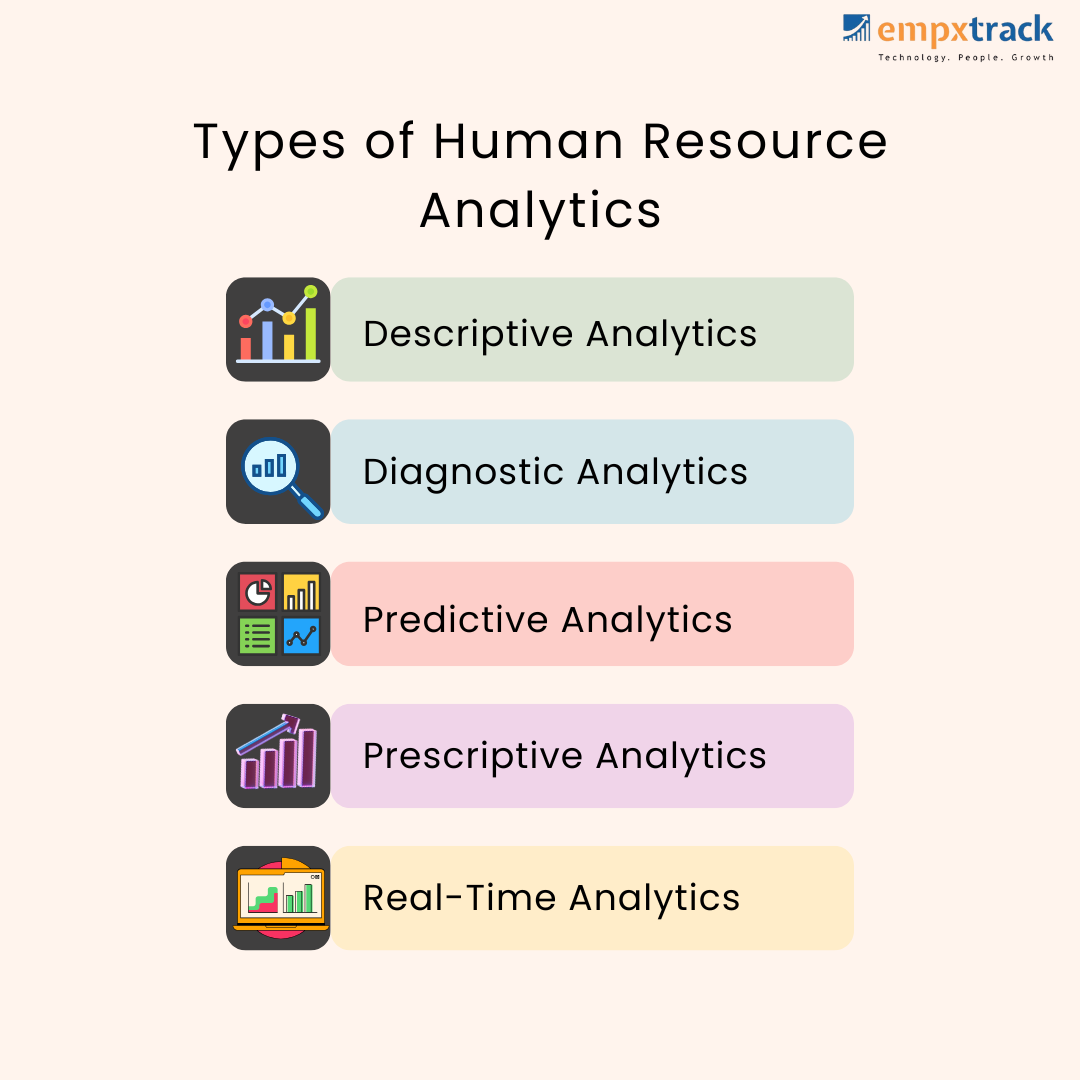
Human resource analytics can be categorized into five types. Each type provides distinct insights into the workforce. Here is a brief summary.
- Descriptive Analytics: This form of analytics offers clarity on “what occurred?” by utilizing historical data. It addresses straightforward inquiries and trends such as “turnover rate” or “how many new employees joined the organization last year.”
- Diagnostic Analytics: It aids in comprehending the “why” underlying the numbers. For instance, if turnover rates rise, it can uncover potential causes, such as ineffective communication, compensation concerns, or insufficient development opportunities.
- Predictive Analytics: This aids in answering “what is likely to occur?” This analytics assists in facilitating better decision-making based on previous and current practices. It employs machine learning and statistical methods to forecast outcomes, such as identifying at-risk employees.
- Prescriptive Analytics: Strategically, it provides actionable recommendations that assist organizations in overcoming challenges and achieving optimal outcomes, such as enhancing training programs to boost productivity.
- Real-Time Analytics: This involves evaluating HR data in real time, enabling teams to make prompt decisions. It is utilized for monitoring HR metrics, detecting potential issues as they arise, and promptly adjusting to workforce changes.
Key HR Analytics Metrics
Data analytics in human resources employs various types of metrics to inform decisions that benefit both the workforce and the organization. Some of these include:
Time to hire: It is an excellent measure of how effective your hiring process is and what adjustments are required to attract talent more rapidly.
Time to fill: This metric emphasizes the entire hiring process. It aids in assessing how smoothly your recruitment strategy operates while also helping to pinpoint any holdups affecting and hampering the process.
Cost per hire: This metric delineates the expenses associated with hiring a candidate, such as advertising, recruitment, and onboarding costs. It helps to evaluate the financial efficiency of your hiring procedure.
Revenue per employee: It provides a clear perspective on overall productivity and highlights how effectively your workforce contributes to financial performance.
Offer acceptance rate: A higher offer acceptance rate signifies that your organization’s employer branding, compensation strategies, and candidate experiences are effectively attracting talent.
Employee net promoter score (eNPS): eNPS measures the likelihood of employees recommending your organization as a great place to work. It acts as a straightforward yet significant indicator of employee satisfaction and commitment.
Absenteeism rate: It evaluates how frequently employees are away from the workplace.
work without prior notice. It can underscore sections for enhancement in employee engagement, wellness, or workplace environments.
Turnover rate: Consistently tracking turnover grants essential insights into which divisions, positions, or managers deal with elevated attrition. These insights assist in recognizing trends and implementing measures to boost retention.
Diversity metrics: This assists in assessing the efficacy of diversity, equity, inclusion, and belonging (DEI&B) initiatives, and emphasizes possibilities to enhance recruitment, retention, and career advancement approaches.
Practical Illustrations of Implementing HR Analytics
Below are some practical HR analytics illustrations of how top organizations leverage HR data and analytics to refine decision-making and foster positive business growth.
The tech powerhouse Google utilized predictive analytics in their hiring initiatives to decrease expenses and expedite the recruitment timeline.
Historically, candidates undertook 15 to 25 rounds of interviews and evaluations. Nevertheless, an examination of the recruitment process indicated that Google could anticipate successful applicants with 86% accuracy via merely four interviews, thereby reducing both duration and cost.
Furthermore, Google crafted an algorithm to reassess previously declined resumes, aiding in the identification of strong candidates for other appropriate positions.
Under Armour
The American athletic footwear and apparel firm, Under Armour, employed an advanced workforce analytics tool to pinpoint the reasons for employee turnover and to predict resignations across its branches.
The findings indicated that 500 of its 5,000 employees were likely to depart within six months. The company effectively diminished actual turnover to 50% below the anticipated level by tackling these causes with enhanced retention tactics, which included targeted incentives and rewards.
Saksoft
The international technology service provider Saksoft has also reaped benefits from HR analytics.
Narayanan Subramanian, AVP Human Resources, Saksoft, shares how Empxtrack’s analytics and reporting have revolutionized their HR practices.
“Empxtrack has adeptly optimized our time tracking processes. The real-time reports and analytics deliver actionable insights into employee hours, project timelines, and resource distribution. With customizations aligned with our business requirements, Empxtrack has offered our teams complete visibility into project progress while ensuring precise client invoicing.”
By utilizing analytics, Saksoft is now making data-informed HR choices, enhancing workforce efficiency, and boosting operational effectiveness across teams.
Read the customer success narrative 👉
Thriveni
Amit Kumar Mishra, Assistant Manager-HR & IR, of Thriveni Group, a global mining corporation, has also expressed how they have benefited from Empxtrack’s extensive reports and analytics.
“The exhaustive reporting functionality is a real game-changer. It provides all the critical insights into attendance trends, aiding us in making informed decisions and swiftly identifying patterns.”
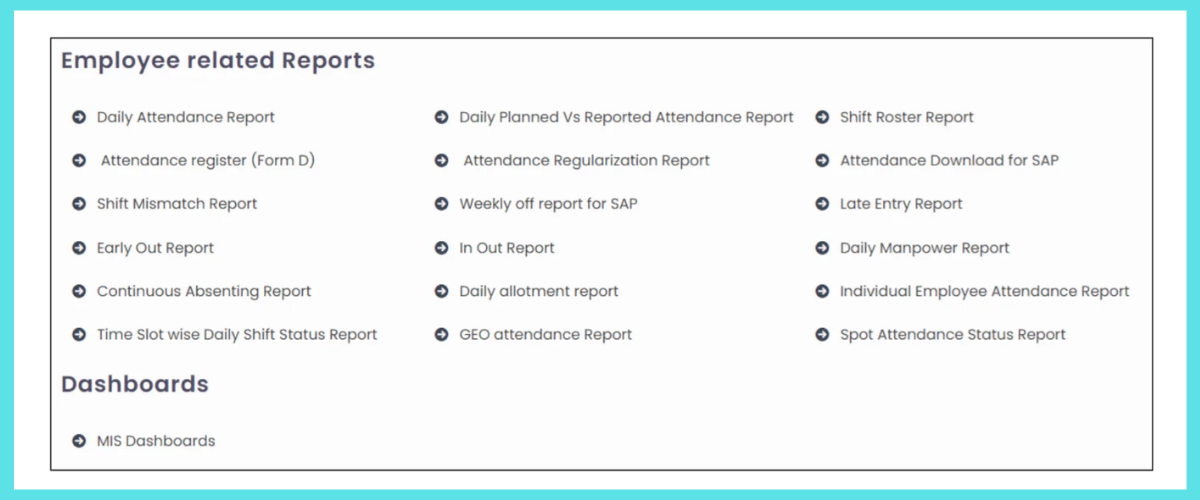
Image: Tailored reports to evaluate employee data
Empxtrack delivered real-time attendance data to their supervisors for enhanced workforce management. Customized reports further facilitated acquiring insights into their employee data.
Read the customer success narrative 👉
Frequent Obstacles in HR Analytics
Merging Data from Various Sources
HR data is frequently dispersed across different systems and formats. Hence, it can be challenging when it comes to consolidating this information as data quantity and intricacy increase.
Skill Deficiencies & Training Requirements
HR teams may not possess the analytical abilities necessary to interpret intricate datasets. Their misinterpretation of data can result in poor choices and overlooked opportunities. Moreover, without adequate tools and training, extracting significant insights can be challenging.
IT & Infrastructure Challenges
Robust and scalable systems are essential for efficient data collection, storage, and integration. In reality, smaller organizations often face difficulties with the resources required to support analytics tools. Additionally, inadequate infrastructure heightens the risk of data breaches, legal complications, and operational lags.
Privacy & Regulatory Concerns
HR must manage sensitive personal data that needs to be safeguarded at all times. Consequently, businesses must adhere to regulations such as GDPR, CCPA, and other local data laws. Furthermore, matters such as employee monitoring, third-party access, and readiness for breaches must be handled cautiously.
Preserving the Human Aspect
It is a truth that HR analytics bolsters decisions but cannot substitute human discretion. Notably, excessive dependence on algorithms can diminish empathy and fairness in HR methodologies. Only a balanced application of data and human perception can produce more ethical and effective HR decisions.
Final Thoughts
The contemporary HR landscape is both data-driven and people-oriented, necessitating organizations to rely on meaningful insights for improved decision-making. Ultimately, HR data holds the insights that can assist in developing strategies and best practices, resulting in more valuable HR services.
Empxtrack aids businesses in staying ahead of workforce trends and challenges by integrating intuitive technology with actionable insights powered by human resource analytics.
Commonly Asked Questions
Q1. |
What is human resource analytics? |
| Ans. | HR Analytics, or workforce analytics, refers to the process within the HR department that encompasses
gathering, arranging, and assessing workforce information. |
Q2. |
Why is human resource analytics significant? |
| Ans. | HR analytics aids in formulating effective people strategies. By utilizing these insights, HR teams can make educated choices that enhance compensation practices, performance, workforce planning, engagement, and retention. |
Q3. |
What are the four categories of HR analytics? |
| Ans. | The four categories of human resource analytics include descriptive, diagnostic, predictive, and prescriptive analytics. |
Q4. |
What distinguishes HRIS from HR analytics? |
| Ans. | An HRIS (Human Resource Information System) acts as the primary database that holds employee information such as payroll, benefits, and records. Meanwhile, HR analytics concentrates on scrutinizing that data to reveal trends, anticipate outcomes, and inform strategic workforce decisions. |
Q5. |
What are illustrations of HR analytics in organizations? |
| Ans. | Organizations utilize HR data and analytics in numerous ways. For instance, predicting employee turnover, recognizing high-performing talent, optimizing recruitment processes, and enhancing workforce planning. |
Q6. |
What is the distinction between HR analytics and people analytics? |
| Ans. | HR analytics originates from data contained within human resources and aims to optimize HR functions. In contrast, people analytics goes beyond HR to include data from various sources within the organization, such as customer statistics, marketing, and finance, to tackle a wider array of business challenges. |
Q7. |
Which tools are utilized in human resource analytics? |
| Ans. | Human resource analytics employs an assortment of tools, comprising HRIS platforms, workforce analytics applications, applicant tracking systems (ATS), employee engagement, and performance management systems. Solutions like Empxtrack are also frequently utilized to derive insights, predict trends, and bolster strategic decision-making. |
Q8. |
What is an HR metrics dashboard? |
| Ans. | An HR metrics dashboard is a management instrument that consolidates and summarizes HR reporting, information, and KPIs, aiding in tracking and analyzing workforce metrics. This dashboard showcases data such as hiring metrics, turnover rates, employee performance, engagement scores, and attendance trends in one location. |
Q9. |
How does predictive analytics assist HR? |
| Ans. | HR Predictive analytics aids human resources by utilizing machine learning and statistical models to evaluate past and present workforce patterns. This allows HR teams to foresee outcomes such as identifying employees at risk of departure and to make proactive, data-informed decisions that enhance workforce planning and retention. |