Embracing a new employee extends beyond a swift office tour and completing necessary paperwork. If not executed correctly, the newcomers may experience a sense of alienation and find it challenging to align with the organization’s values. Hence, a comprehensive employee onboarding checklist assists them in assimilating effortlessly into the company and considerably improves their overall experience.
Investing effort and time in educating and training new employees regarding their roles & workplace culture is extremely beneficial. A thoughtfully constructed onboarding process results in heightened engagement, reduced employee turnover, and an elevated retention rate. Since there’s always a subtle distinction between crafting a good impression and a lasting one, a meticulously designed employee onboarding checklist is essential for every HR professional.
Here’s a practical HR onboarding checklist to execute a step-by-step procedure to familiarize new hires with the organization and its culture. So, let’s dive in.
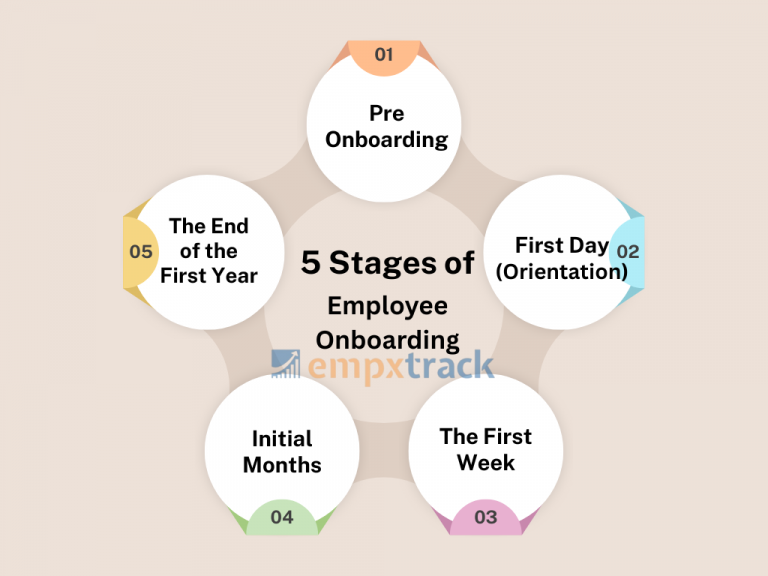
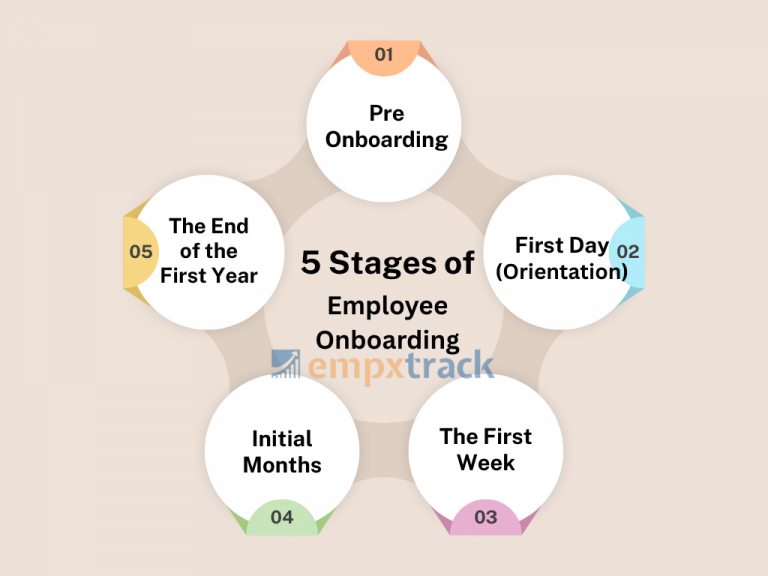
5 Stages of Employee Onboarding
An uncomplicated and efficient onboarding checklist for HR practitioners
1️⃣ Pre-Onboarding
2️⃣ First Day (Orientation)
3️⃣ The Initial Week
4️⃣ First Couple of Months
5️⃣ The Conclusion of the First Year
Pre-Onboarding
This phase begins even before the employee starts attending the office. In fact, this is the initial interaction between the organization and the new employee. It consequently guarantees that the newcomers experience a smooth adaptation to the company.
When a new employee is welcomed into their workplace with a systematic orientation plan and a well-organized workspace, it creates a strong initial impression.
Furthermore, this level of readiness demonstrates the employer’s dedication to a seamless onboarding journey and conveys enthusiasm in welcoming the newcomer. Ultimately, this motivates employees to approach their work duties with assurance from day one.
Pre Onboarding Checklist:
The new employee onboarding checklist, coupled with a well-structured onboarding strategy, guarantees a smooth commencement for your newcomers:
- » Welcome new employees by dispatching a personalized introductory email. The message should include details about the first day (attire guidelines, arrival time, etc.)
- » Prepare all forms and documentation that the new employee needs to complete, such as the benefits registration form and NDA.
- » Share a company-wide announcement email regarding their position and joining date.
- » Organize and set up their workspace, including their desk, chair, and any other necessary equipment they may need.
- » Issue their identity cards and access badges to guarantee they are ready for hassle-free entry to the premises.
- » Assemble a welcome package including an employee handbook.
- » Pair the new hire with a seasoned employee to assist and guide them.
- » Provide them with uniforms or t-shirts of the proper sizes.
- » Ensure timely access to email, systems, tools, and internal resources.
Joining Day
On the joining day, it’s essential to ensure that your employees feel at ease in the new work setting. To start, make them acquainted with company policies and allow them some time to socialize with colleagues. Additionally, plan to allocate a small portion of the first day for formal meetings with their immediate supervisors, managers from various teams, coworkers, and anyone associated with the work position. After all, the initial days speak volumes about your workplace culture, and thus, employees should feel pleased that they have made the correct choice.
First Day Checklist
Leave a lasting impression on new hires through a thoughtfully curated first-day experience. Utilize this checklist on their initial day of joining.
- » Welcome them warmly upon their arrival.
- » Provide them with a guided office tour of critical areas, such as meeting rooms, the cafeteria, and their designated workstation.
- » Introduce them to their supervisor, team members, and assigned mentor.
- » Ensure all HR formalities, including essential onboarding documentation, are properly signed and submitted.
- » Arrange a one-on-one meeting with the employee and their direct supervisor.
- » Educate them about your company culture and values.
- » Additionally, organize a team welcome by setting up an informal meet-and-greet, coffee break, or team lunch.
- » Lastly, confirm that all employee login access and credentials are functioning correctly.

The Initial Week
The first days are not only intended to welcome the employee but are also the ideal time to direct an employee’s attention towards their job responsibilities. To facilitate this transition, introduce the employee to the ongoing projects the team is undertaking, and gradually incorporate them into the tasks at hand. Additionally, go over the key result areas (KRAs) to motivate them to perform better and succeed in their new job position.
First Week Checklist
Employees can feel overwhelmed with information during their first week. Therefore, it is crucial to assist them in navigating confidently by having a well-thought-out onboarding plan.
- » Schedule a casual coffee or team lunch to help them forge early connections with colleagues.
- » Confirm that the new hire has completed essential documentation, including payroll, benefits, and HR forms.
- » Check access to all systems, software, and equipment.
- » Introduce them to cross-functional teams they will collaborate with regularly.
- » Clarify initial job expectations and discuss short-term objectives.
- » Review upcoming relevant projects, timelines, and primary deadlines related to the employee.
- » Conduct an end-of-week check-in to address inquiries and also gather feedback about their onboarding experience.
- » Incorporate them into team calendars, individual meetings, and events.
- » Track their advancement on the training schedule to maintain momentum.
- » Guide them through the employee manual and significant company procedures.
Initial Months
Once the employee is prepared to confidently embrace the tasks and contribute to team initiatives, ensure they receive the essential support. Assist them in further establishing a flexible work schedule to enhance efficiency. When crafting feedback surveys or internal communications during this timeframe, utilizing an AI Humanizer can help ensure your messaging comes across as supportive and uplifting rather than impersonal.
Depending on the employee’s job function and probation duration, allocate time to evaluate performance and provide feedback. Last but not least, keep a record of regular follow-ups. This instills a sense of assurance in the employees and also conveys the message that their daily work output is monitored and appreciated.
First Month Checklist
Ensure your new team member feels welcomed, supported, and aligned with their position.
- » Send them an onboarding feedback survey to gauge their experience thus far.
- » Encourage them to give a brief presentation about themselves at a team meeting.
- » Arrange a progress check meeting between the employee and their supervisor to assess development.
- » Set up a personal check-in to discuss their well-being and address any inquiries.
- » Confirm that all job and role-specific training sessions are completed.
- » Ensure compliance, ethics, and company policy training have been successfully finalized.
- » Double-check that they’ve acknowledged the employee manual and related documents.
- » Furthermore, organize any additional learning sessions based on current requirements or performance feedback.
The overall goal of effective onboarding is to engage employees from the outset and convey that they are valued. Therefore, make it a priority to collect employee feedback periodically to understand their experience and job satisfaction levels at every phase. This will ultimately assist you in enhancing onboarding best practices, consequently attracting and retaining top talent.

At the Conclusion of the First Year
While a new employee checklist typically covers the initial 90 days, it is equally vital to provide ongoing support and monitoring throughout the first year. This method helps keep new hires engaged, aligned with their objectives, and fully integrated into the organization. This should include:
- » Conducting a year-end check-in with the employee to reflect on their first year, address any issues, and ensure they feel supported in their position.
- » Reviewing the employee’s performance in relation to long-term objectives and key responsibilities established during onboarding.
- » Discussing career advancement plans with the employee. Inquire about their aspirations and skill development interests.
- » Sharing an anonymous feedback form with your employee to gather opinions on the onboarding experience and areas for enhancement.
- » Analyzing feedback to identify patterns, address potential deficiencies, and evolve the onboarding program to boost employee satisfaction and retention.
To guarantee a smooth onboarding experience, it’s beneficial to decompose the entire journey into structured, manageable checklists. Additionally, since each new hire brings unique responsibilities and role-specific requirements, it’s crucial to adapt the onboarding process accordingly.
Feel free to utilize this employee onboarding checklist to ensure a successful onboarding experience with high retention rates & a satisfied workforce!
Onboarding Remote Employees
Since the onset of COVID-19, the world has transitioned to remote work more than ever. With this shift, in-person meetings are no longer an essential requirement. Many businesses have even extended this strategy to virtual hiring and onboarding processes.
Here is a remote onboarding process that should be followed:
- » Send the new hires a personalized welcome email, employee manual, and employee onboarding documents to sign electronically.
- » Discuss company-related regulations and policies.
- » Share a checklist of expectations for the first week.
- » If your remote employee requires any tools and equipment, such as a laptop, tablet, or software, inform your IT department to provide it.
- » Set up their accounts for office emails, chat applications, and all communication channels. Invite them to all relevant department and company meetings online.
- » Acquaint team members with their new hires’ responsibilities and the day they will commence work.
- » Organize a conference call to interact with each team member and learn about their roles.
- » Provide them with online workshops, webinars, and instructional videos if training is needed for their role.
Empxtrack stays attuned to the latest hiring trends and workplace dynamics. Its onboarding software aids in streamlining the entire process by eliminating manual tasks and saving time in onboarding formalities.
Free Employee Onboarding Template for New Hires
Our free, editable Excel employee onboarding template offers you the flexibility to customize the onboarding process to your company’s requirements. You can easily input employee details and manage onboarding with full authority and ease. Get started with your free template today.
Final Thoughts
Onboarding is not merely about providing a warm welcome; its significance transcends this. It represents the initial step in fostering loyalty, engagement, and retention among employees. In today’s climate, where talent turnover is costly and employee experience shapes employer branding, a thorough onboarding checklist becomes essential. It’s not just about checking off boxes, but also about ensuring the employee feels recognized, supported, and valued.
You can create a seamless process for new hires by systematically breaking the onboarding journey into structured phases, from pre-onboarding all the way through to the end of the year. A well-organized
An employee onboarding checklist can greatly enhance this. An employee is more inclined to flourish and excel if they feel engaged from the very first day.
Frequently Asked Questions
Q1. |
What constitutes an employee onboarding checklist? |
| Ans. | An employee onboarding checklist details all the crucial tasks necessary to assist a new employee in integrating seamlessly into their position. This checklist not only directs them through their initial days or weeks, but also equips them to stay compliant with company regulations and legal standards. |
Q2. |
Why is an onboarding checklist essential? |
| Ans. | Creating a smooth onboarding experience is vital for guiding new hires in understanding their roles. It also aids them in becoming acquainted with the company’s policies, culture, and core values. Hence, onboarding for new employees is crucial. |
Q3. |
What should be part of a new hire onboarding checklist? |
| Ans. | A new hire onboarding checklist should comprise essential activities such as:
● Finalizing HR documentation |
Q4. |
What duration should the employee onboarding process cover? |
| Ans. | As per most HR specialists, the onboarding process for employees should extend over approximately six months. This period coincides with the conclusion of probation. Nevertheless, it may also be lengthened to a year to ensure sustained success and retention of the employee. |
Q5. |
What distinguishes onboarding from orientation? |
| Ans. | The key difference lies in the fact that employee orientation is a brief event, whereas onboarding is a more extended process that can even span a year. |
Q6. |
Is it permissible to use a template for onboarding? |
| Ans. | Certainly, you can utilize a new hire checklist template for onboarding purposes. This is even advisable if you wish to ensure uniformity, conserve time, and minimize the risk of overlooking essential steps throughout the onboarding process. Empxtrack offers an employee onboarding checklist template to optimize the entire procedure. |
Q7. |
Does onboarding have an effect on employee retention? |
| Ans. | Yes, onboarding can considerably influence and enhance employee retention. A well-organized onboarding procedure makes new hires feel welcomed, supported, and assured in their roles. This fosters engagement, decreases early turnover, and cultivates long-term employee loyalty. |