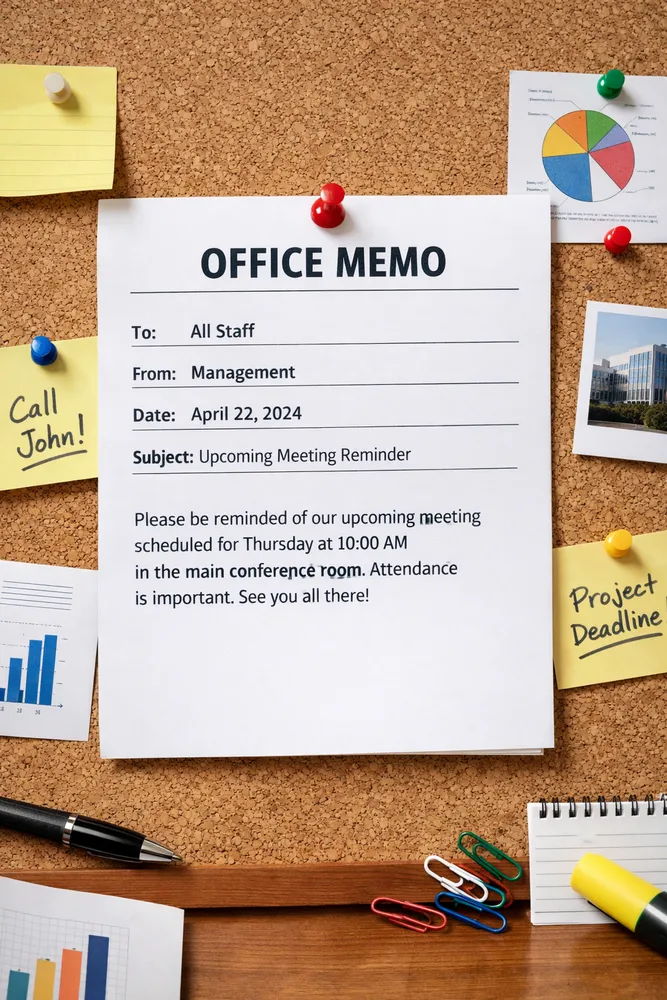
Experts across sectors frequently encounter difficulties in conveying messages effectively within organizations. Numerous individuals find themselves composing extensive emails or vague communications that do not elicit prompt replies. Whether the goal is to coordinate departments, introduce new initiatives, or discuss policy shifts, the dilemma lies in delivering information succinctly while prompting action. An ambiguous or poorly constructed business memo can result in misunderstandings, delays, or even expensive misinterpretations.
Skilled communication experts acknowledge the memo as one of the most influential instruments for internal dialogue. This manual offers a comprehensive, contemporary framework for crafting a business memo that upholds a professional tone, aids decision-making, and enhances credibility within any organization. The subject of the business memo will be examined thoroughly to assist employees, managers, and executives in creating messages that accomplish their desired objectives while embodying professionalism and leadership.
Grasping the Purpose of a Business Memo
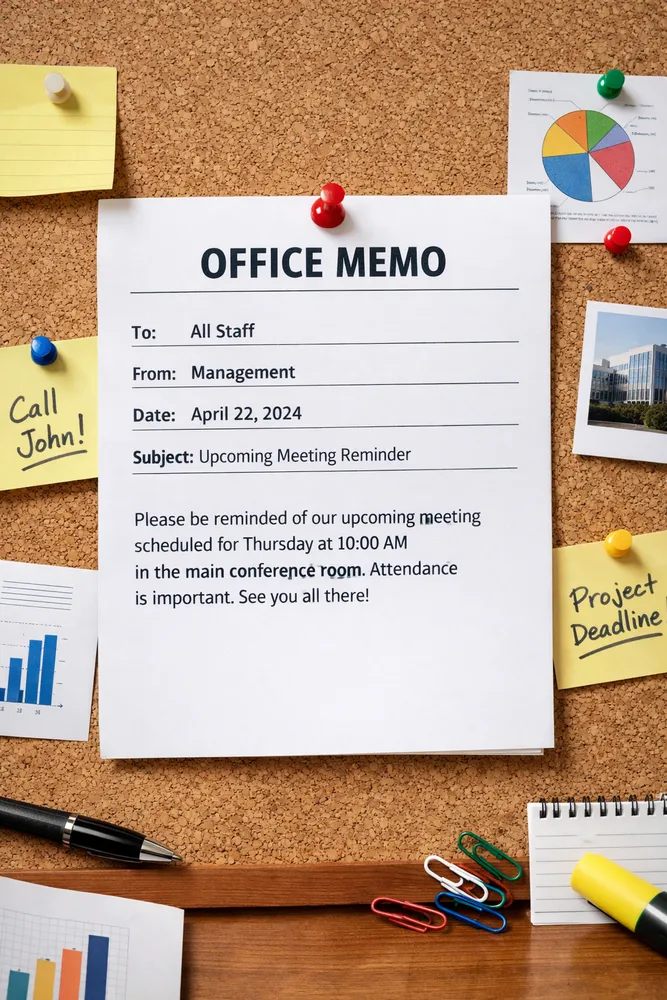
A business memo, abbreviated from memorandum, is an internal communication document aimed at informing, requesting, or persuading employees or colleagues within a corporation. In contrast to informal messages, memos adhere to a structured, factual, and purpose-driven tone. They are vital for fostering organizational coherence, reinforcing accountability, and documenting important communications across divisions.
Organizations depend on business memos for functions such as policy revisions, project launches, meeting notifications, process enhancements, and employee appreciation. The succinct nature of a memo guarantees that essential points stand out, reducing confusion and maintaining consistency among teams. The U.S. Office of Personnel Management and the Society for Human Resource Management highlight clarity and conciseness as hallmarks of effective internal communication, two principles refined through memos.
Each business memo shares fundamental aims:
- Inform stakeholders regarding new policies, updates, or events.
- Request action, resources, or feedback from a particular audience.
- Persuade employees to endorse initiatives or accept new processes.
- Document business determinations, ensuring transparency and accountability.
Effective business memos frequently possess certain characteristics: a direct subject line, factual tone, brevity without loss of meaning, and a clear call to action. These traits guarantee that stakeholders promptly comprehend what is expected of them. Given that contemporary workplaces increasingly rely on asynchronous communication, composing a precise memo has never been more crucial.
Structure of a Well-Written Business Memo
A business memo transcends mere formality—it’s a communication resource engineered to provide clarity, guidance, and impact. When crafted effectively, it guarantees that information traverses smoothly across teams and departments, diminishing misunderstandings and fostering outcomes. Below is the established structure that every professional should adhere to.
- Header: The header contains “To,” “From,” “Date,” and “Subject.” It swiftly identifies recipients and the memo’s aim. For broader distribution, mentioning department names or groups instead of individuals simplifies delivery.
- Opening: The initial paragraph articulates the memo’s intent directly. Clarity at the start ensures immediate attention on the purpose, whether announcing, requesting, or informing.
- Context or Background: This segment offers essential information leading to the subject. It clarifies the justification for the message, aiding recipients in understanding causes, implications, or background.
- Discussion or Body: Here, specifics and reasoning underpin the message. Employing bullet points, subheadings, or numbered lists improves skimmability. Each paragraph should address only one concept to enhance clarity.
- Conclusion and Call-to-Action: The final paragraph recaps key points and specifies anticipated actions or feedback. If deadlines or follow-ups are anticipated, they should be clearly articulated.
Each memo format can be tailored according to the audience hierarchy. For instance, executives generally appreciate concise, data-driven insights, while project teams seek actionable details. Upholding professional consistency throughout ensures understanding across organizational levels.
Selecting the Appropriate Tone and Style
An effective business memo achieves a balance between authority and approachability. While it should retain a professional tone, it must also feel human and relatable. Overly formal language can obscure intent, while a too-casual tone risks undermining credibility. The appropriate tone varies based on corporate culture, audience, and message urgency.
For intricate organizations, consistent tone builds trust. The language must be in accordance with brand voice guidelines and communication standards. Senior leaders should adopt assertive yet respectful wording, while internal memos to colleagues might utilize collaborative language that emphasizes shared responsibility and teamwork.
- Utilize plain language—steer clear of jargon that may alienate non-expert audiences.
- Adopt active voice—encourage directness and accountability.
- Maintain brevity—remove unnecessary filler and repetitive terms.
- Incorporate positive phrasing—inspire engagement and promote compliance.
- Ensure neutrality—for sensitive or compliance-driven updates, maintaining neutrality ensures professionalism while capturing attention.
In cases where memos contain data or policy directives, neutrality of tone guarantees professionalism while capturing attention. In sensitive matters such as organizational restructuring or compliance issues, empathy can coexist with firmness to uphold morale.
Formatting Best Practices for Clarity
In a time dominated by digital displays, correct formatting determines how effectively recipients engage with a memo. Visual hierarchy boosts comprehension, allowing readers to navigate information swiftly. Memos should be formatted to highlight key points without inundating readers with dense prose.
-
Typeface choice: Sophisticated sans-serif typefaces such as Arial or Helvetica guarantee legibility on various devices.
- Margin: Keep one-inch borders and consistent line spacing for aesthetic uniformity.
- Titles and Subtitles: Structure information logically; subtopics should be emphasized with bold or italics for prominence.
- Bulleted or Numbered Points: Divide intricate information into manageable sections.
- Length of Paragraphs: Employ brief paragraphs (3–5 lines) to enhance readability.
Appropriate formatting contributes to productivity by reducing cognitive load. In large enterprises where information saturation is prevalent, simplicity can influence whether staff respond to directives without delay. Selecting legible font styles and uniform layouts conveys organizational sophistication and consideration for employee time.
Samples of Common Business Memos
Business memos are encountered in almost every professional environment. Comprehending their use across various situations allows employees of all ranks to quickly adapt templates. Below are typical memo categories and their organizational functions.
| Memo Category | Main Objective |
|---|---|
| Informational Memo | Communicates shifts, policy modifications, or forthcoming events. |
| Request Memo | Solicits recipients for consent, data, or involvement in initiatives. |
| Confirmation Memo | Summarizes spoken agreements, gatherings, or authorizations. |
| Directive Memo | Offers guidance or policy directives from management. |
| Persuasive Memo | Motivates backing for projects, proposals, or procedural shifts. |
Every memo type must adhere to organizational tone and be accompanied by clear specifics. For instance, an informational memo about hybrid work arrangements should detail implementation timelines, resources, and escalation channels for questions.
Steps to Create a Business Memo
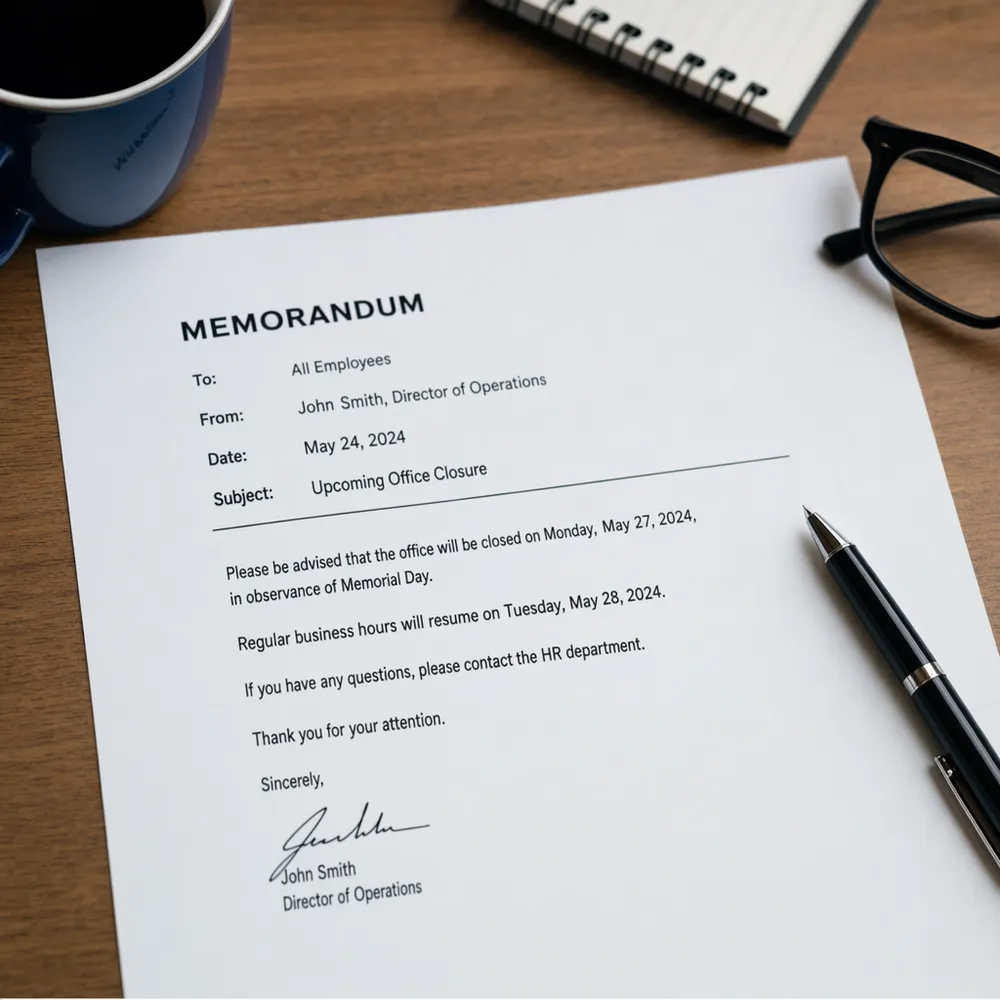
Skilled communicators engage in a systematic approach that ensures business aims align with written clarity. The subsequent steps outline how professionals might construct a memo that fosters trust and prompt action.
- Clarify the Aim: Establish whether the memo intends to inform, solicit, or convince. Fit tone and format with the goal.
- Recognize the Audience: Comprehending recipients’ roles ensures relevance and values their time.
- Collect Important Information: Confirm dates, figures, and sources prior to writing. Precision bolsters credibility.
- Compose the Message: Start with purpose, set the context, and then present key information systematically.
- Tweak Tone and Format: Enhance readability using active voice, consistent language, and parallel sentence structure.
- Check for Clarity: Conduct a peer review or seek managerial approval to verify accuracy.
- Disseminate Effectively: Dispatch the memo using authorized internal platforms or intranets to guarantee accessibility.
Clear organization and message progression boost credibility within operations. Readers rely on familiarity, which an orderly format facilitates. Well-crafted memos reduce superfluous email exchanges, accelerate decision-making, and document organizational responsibility.
Mistakes to Avoid in Business Memos
Even seasoned professionals sometimes commit errors that undermine corporate communication. Acknowledging these missteps avoids misunderstandings and reinforces confidence in leadership messages. The most common faults include ambiguity, lack of structure, and inadequate proofreading.
- Unclear Objective: A memo without clear goals confuses employees and diminishes adherence.
- Excessively Technical Language: Overuse of jargon limits understanding and alienates readers.
- Neglecting Formatting Standards: Inconsistent fonts or headings appear unprofessional.
- Failure to Include a Call-to-Action: Without explicit instructions, memos lose their impact.
- Inappropriate Tone: Being overly informal or excessively strict may misrepresent intent.
- Inadequate Proofreading: Mistakes indicate carelessness, which undermines authority.
To uphold professionalism, each memo should be examined from the reader’s viewpoint. This method uncovers gaps in comprehension before distribution. Progressive organizations often include review phases in communication workflows to ensure consistency.
Utilizing Digital Tools for Enhanced Memo Writing
Contemporary organizations are increasingly dependent on digital resources for internal communication. From collaborative platforms like Microsoft 365 to AI-enhanced writing tools, technology streamlines memo creation and enhances accuracy. Templates, version monitoring, and feedback systems facilitate consistency while ensuring expeditious message approvals.
Certain enterprise systems allow monitoring of memo engagement analytics, revealing open rates and read confirmations. These metrics assist managers in evaluating whether employees received and comprehended vital messages. For large-scale communications such as HR policy implementations, analytics contribute to compliance reporting.
- Document Collaboration: Online editing and shared working environments eliminate version ambiguities.
- Template Repositories: Corporate templates uphold compliance with company branding and tone.
- Automation Mechanisms: Automated approval workflows hasten distribution.
- Grammar and Readability Checkers: Tools like Grammarly or Microsoft Editor guarantee refined communication.
- Accessibility Review: Features like screen-reader optimization foster inclusivity.
With the escalating adoption of hybrid workplaces, digital solutions amplify the significance of structured, legible memos. Employees across…
Time zones rely on thoroughly organized documents that convey instructions clearly without the necessity for immediate clarification.
Bolstering Professional Reputation Through Effective Writing
Individuals who excel in memo composition often develop reputations as analytical thinkers and proficient communicators. Within corporate structures, articulate writers often emerge as reliable sources for decision documentation. Consistency in tone, format, and delivery signifies readiness for leadership roles and meticulousness.
Written correspondence, especially in organized formats like memos, strengthens credibility when communicating with senior management or diverse audiences. As companies prioritize transparency and documentation in light of regulatory demands, mastery in writing precise memos is directly linked to organizational power.
In human resource management, numerous executives assess communication skills through internal communications. As a result, well-structured and refined memos not only enhance internal collaboration but also aid in career progression.
Establishing a Culture of Clear Communication

High-achieving organizations regard internal communication as a strategic advantage. Promoting standardized memo formats guarantees organizational fluency irrespective of departmental or generational disparities. Corporate training initiatives focused on memo writing equip employees to record actions effectively and sustain workplace harmony.
When leadership establishes expectations for clarity and succinctness, employees reflect those standards. Gradually, this practice fosters organizational coherence and enhanced accountability. Regular business memo usage can minimize misunderstandings, improve collaboration, and create documented records of operational decisions that align with audit readiness principles.
Enhance Workplace Communication Skills Today
Crafting business memos successfully necessitates a combination of clarity, structure, and professionalism. A memo that informs, requests, or persuades with accuracy illustrates leadership capability and organizational worth. For professionals aiming to bolster their written communication and career visibility, honing this skill is vital. Many amplify overall impact with professional resume writing assistance that reinforces messaging consistency and enhances professional branding throughout communications.
Commonly Asked Questions
What is the main purpose of a business memo?
The primary goal of a business memo is to convey significant information, requests, or instructions within an organization. It acts as a succinct document that guarantees recipients clearly grasp objectives, timelines, or updates pertinent to business operations.
What is the ideal length of a standard business memo?
An effectively structured business memo should typically span one to two pages, depending on the intricacy of the topic. The document must be sufficient to present all necessary details but concise enough to remain easily digestible in one reading.
What language style enhances a business memo’s effectiveness?
An efficient memo utilizes clear, straightforward, and active language. Sentences should be devoid of excessive jargon, and the tone should align with the company’s formal standards. Utilizing plain business English and a consistent format ensures professional readability.
When should employees opt for a business memo over an email?
Employees should utilize a business memo when discussing formal subjects such as policy alterations, directives, or company-wide updates requiring permanent documentation. Memos promote accountability and clarity, whereas emails are more appropriate for informal or one-on-one exchanges.
Can visual elements like charts be included in a business memo?
Indeed. When applicable, charts or tables can elucidate data-driven points. Visual components enhance clarity, particularly in memos addressing performance metrics, timelines, or compliance updates. However, formatting should remain tidy and accessible for consistent readability.