The four labor codes represent the most significant transformations in India’s job market. This is not merely a policy refresh but a fundamental change that renders a labor law compliance checklist more vital than ever.
Consequently, organizations must prioritize labor code adherence due to its increasing importance in business activities. For small enterprises, startups, factories, and MSMEs, this involves assuming new duties to meet revised labor regulations and wage frameworks. Hence, it is crucial to ensure workplace compliance in India. The positive aspect is, you don’t have to feel daunted.
In this article, we have assembled a straightforward and actionable checklist for labor law compliance that anyone can effortlessly follow. After all, a methodical approach to compliance can greatly diminish legal risks for organizations. By adhering to this, businesses can guarantee they remain informed about legal obligations while cultivating a fair and safe environment for all staff members.
Why is Labour Law Compliance Essential in India
Labor law compliance is critically important to secure workers’ job stability, promote a healthy working environment, and provide appropriate wages and benefits to everyone. Complying with labor laws also ensures that employees receive fair treatment, eliminating opportunities for discrimination and exploitation by management.
Maintaining compliance not only protects employees’ rights but also aids businesses in avoiding penalties and reputational harm that can arise from non-compliance. In comparison, compliant organizations face fewer interruptions and can concentrate on their long-term development.
Compliance also serves a vital function in standardizing HR procedures and fostering efficient and transparent HR operations. By adhering to statutory regulations, such as those related to wages, social security, working hours, and workplace safety, businesses can not only standardize their HR practices but also operate seamlessly.
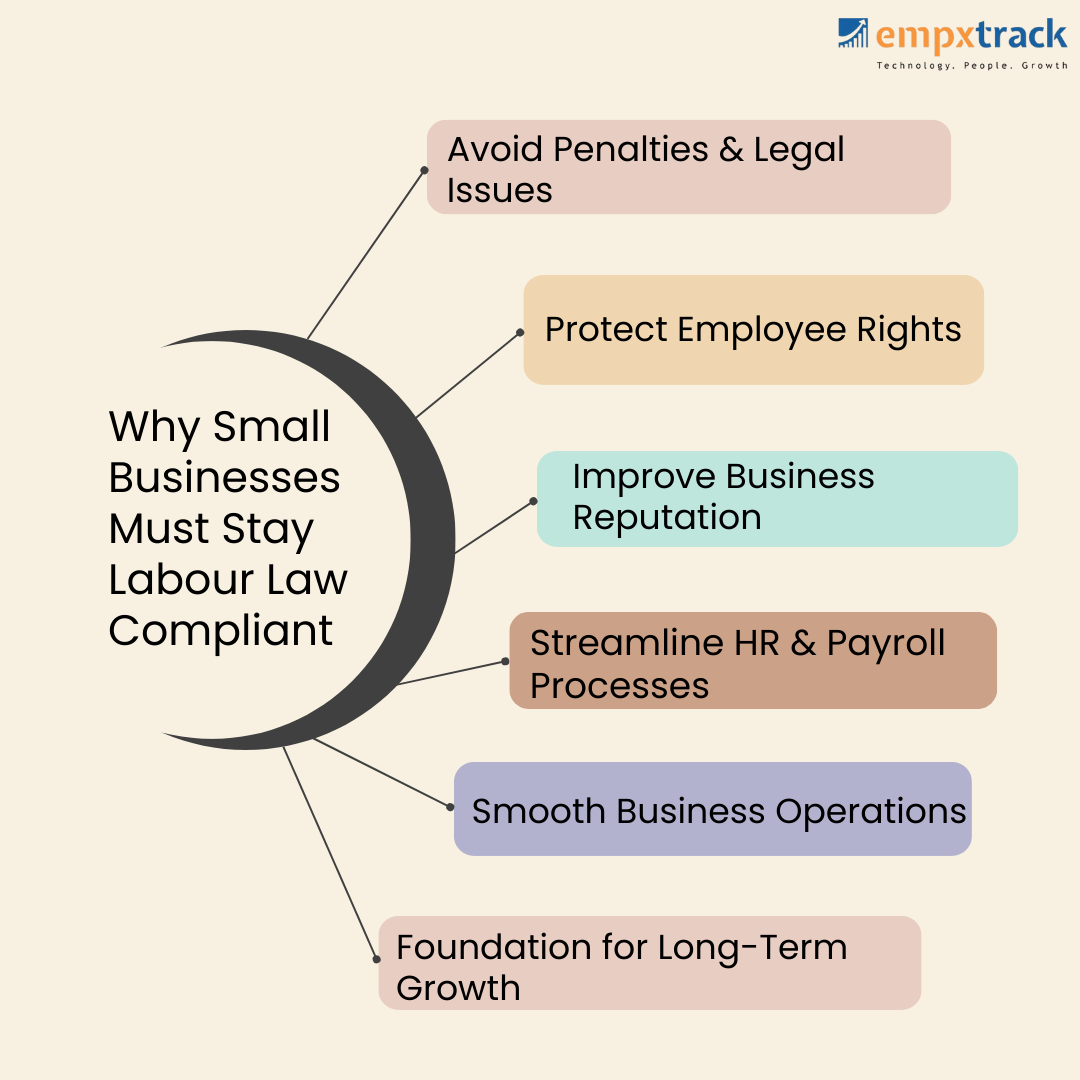
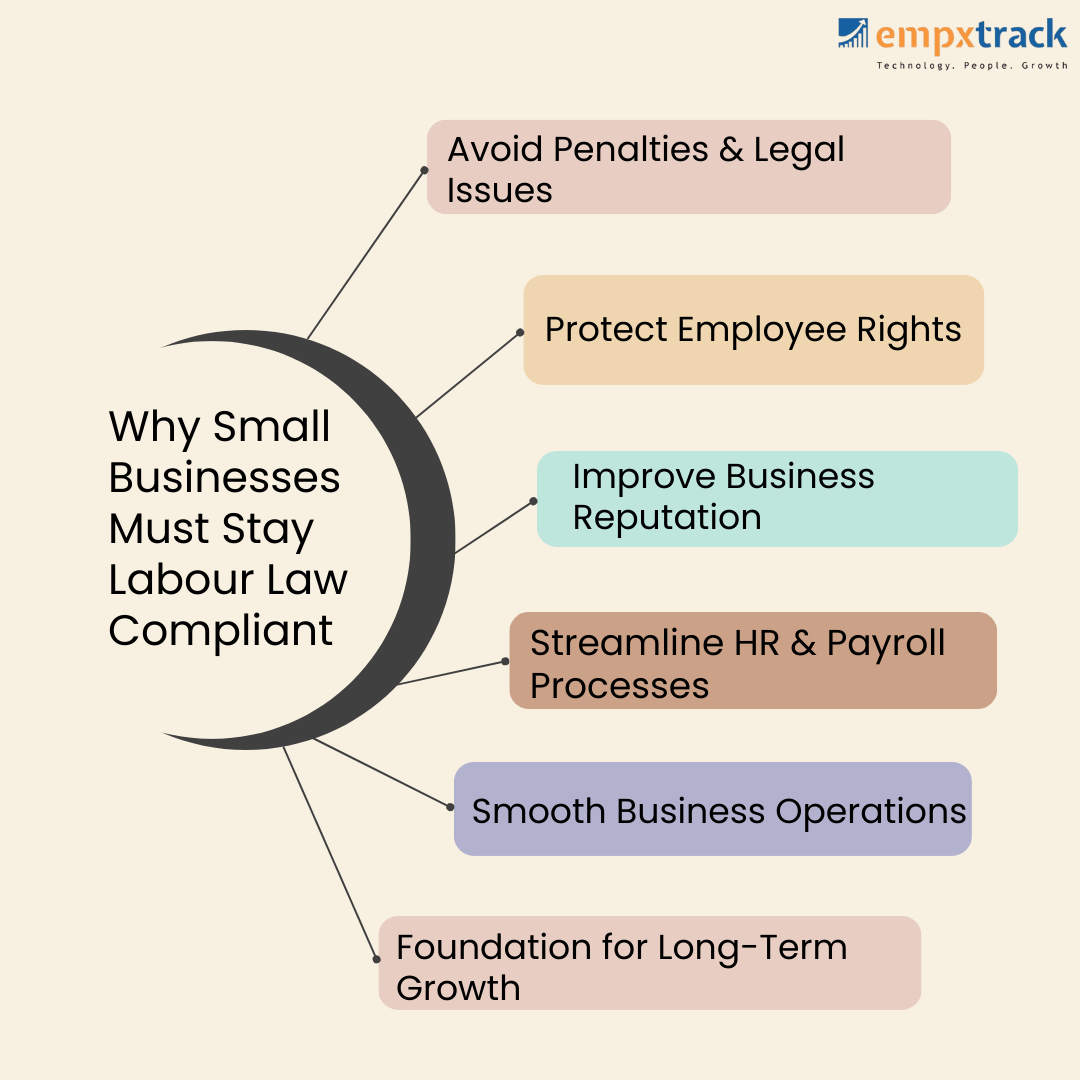
Why Small Businesses Need to Comply with the New Labour Codes
Small enterprises are experiencing the effects of the new labor codes more acutely; however, it is essential for them to comply with the latest laws and regulations. Adherence helps prevent legal penalties, fines, legal notices, and inspections that could disrupt business functions. Moreover, following these regulations guarantees that employees’ rights are safeguarded, from fair wages and social security benefits to safe working environments, which consequently strengthens loyalty and trust.
Upholding compliance also improves the business’s reputation, indicating that professionalism and ethical practices are emphasized and prioritized. This, in turn, can assist in attracting talent and potential clients.
Additionally, compliance with the codes streamlines HR procedures, including payroll, record management, and contract audits. By enacting this, small enterprises will not only mitigate risks but also promote transparency in the workplace for seamless operations. Ultimately, consistent adherence lays a solid foundation for lasting success.
Labour Law Compliance Checklist
Here is a HR compliance checklist for India in 2026.
Wage & Salary Structure Compliance
● Conduct salary structure audits with a chartered accountant to pinpoint allowance exposure
● Ensure Basic + DA = at least 50% of overall wages
● Provide minimum wage as per the rates declared by the state government
● Deduct PF and ESI in accordance with eligibility
● Identify employees whose take-home pay may be altered
● Prepare for increased PF contributions
● Compensate for overtime at double the wages
● Ensure timely salary disbursements by setting automatic payroll notifications to avoid delays
Employee Documentation & Employment Contract Compliance
● Distribute appointment letters to all new hires and existing employees who lack them
● Review and update standard employment contracts with legal advice
● Formally document performance issues
● Train managers on new exit procedures
● Estimate severance liabilities based on current headcount
● Allocate funds for 2–3 months of salary for each departing employee
Working Hours, Leave, Shift Rules & Attendance Compliance
● Adhere to the 48-hour weekly work limit
● Provide a mandatory weekly off
● Paid leave commences after 180 days of service
● For night shifts, ensure transport and security arrangements through approved vendors
● Implement systems to track gig worker hours and payments
● Follow the night shift regulations for women, ensuring their consent and safety measures
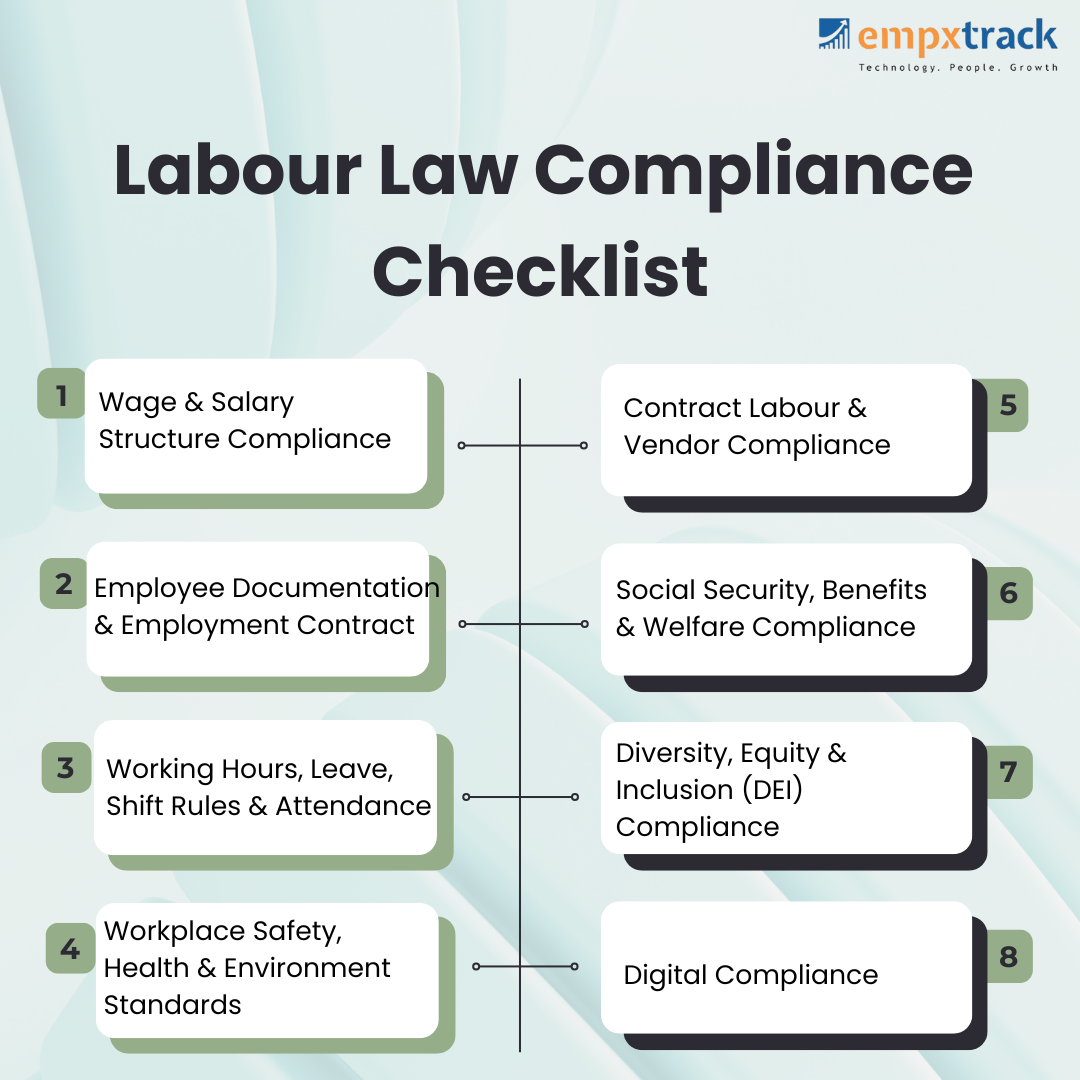
Workplace Safety, Health & Environment Standards
● Appoint a safety officer and schedule annual safety evaluations
● Maintain essential safety and cleanliness benchmarks
● Provide sufficient sanitation, drinking water, and adequate ventilation
● Record current safety practices (including basic ones)
Contract Labour & Vendor Compliance
● Verify the validity of contractor licenses
● Review contractor classifications
● Amend vendor agreements with clear worker classification terminology
● Ensure contractor documentation and adherence are valid
Social Security, Benefits & Welfare Compliance
● Guarantee maternity benefits for eligible employees
● Fixed-term workers should receive benefits comparable to those of full-time employees
● Provide gratuity for fixed-term employees after a year of service
● Keep PF/ESI records updated
● Reserve 1–2% of gig-worker payments for welfare contributions
Diversity, Equity & Inclusion (DEI) Compliance
● Develop and publish DEI policies ensuring equal opportunities
● Perform a pay-equity audit (based on gender/role)
● Announce equal opportunities for transgender individuals
Digital Compliance
● Keep digital backups of all documents
● Automate attendance, leave, payroll, and salary slips
● Maintain digital records of salary disbursements
Conclusion
It’s essential for businesses, regardless of size, to remain compliant with the latest labor regulations. By doing so, they not only protect employees’ rights but also the organization’s legal standing. This will also reduce legal risks and promote a constructive work environment.
Moreover, adhering to these regulations will lessen administrative errors and minimize the likelihood of disputes. HR teams can then concentrate more on strategic initiatives like talent development and workforce planning.
Non-compliance can expose businesses to considerable legal and operational risks. Therefore, ensuring full compliance with a labor laws compliance checklist will facilitate smooth operations and build trust with employees. Ultimately,
it will enhance the organisation’s long-term development and reliability.
More has been discussed in our previous articles regarding the labour codes and their consequences for employees and enterprises. Explore them thoroughly to master the labour codes reforms set for 2025.
Commonly Asked Questions
Q1. |
What is contained in an HR compliance checklist? |
| Ans. | The HR compliance checklist encompasses wage and salary adherence, employee contracts and documentation, attendance and shifts, workplace safety, environmental health standards, social security benefits, contract labour, vendor relations, DEI, and digital compliance. |
Q2. |
What salary regulations must HR comply with under the new labour codes? |
| Ans. | Under the new labour codes, HR is required to guarantee that the Basic Salary + Dearness Allowance (DA) constitute a minimum of 50% of an employee’s overall pay. They should ensure timely salary disbursements and implement automated payroll notifications to avert delays. In addition, HR should budget for 2–3 months of salary for each exiting employee. This ensures compliance with workplace regulations in India. |
Q3. |
What documents are employers required to keep for compliance? |
| Ans. | Employers need to maintain a range of documents to guarantee adherence under the new labour codes and statutory compliance checklist. This includes employee records, attendance and leave logs, wage and payroll documentation, health and safety files, social security records such as PF and gratuity, and contract labour registrations. |
Q4. |
Are gig workers incorporated in the new compliance requirements? |
| Ans. | Yes, gig workers are covered under the new labour codes. For the first time, the Social Security Code, 2020, officially acknowledges gig and platform workers and includes them within the social security structure. |
Q5. |
How can employers remain compliant with working hours and shifts? |
| Ans. | Employers can maintain compliance with working hours and shifts by adhering to these best practices for HR: Observing the working hours limit Rectifying overtime payments Managing shifts responsibly Employing attendance and shift scheduling software Staying informed of state-specific regulations Ensure that policies are effectively communicated and implemented through regular labour law audits. |
Q6. |
What social security benefits are employers required to provide in 2026? |
| Ans. | In 2026, employers must provide social security benefits to all worker categories, including those in the unorganised sector as well as gig and platform workers. Such workers will be included in schemes for PF, ESI, and additional protections like disability and life insurance. This will ensure wider and more inclusive social security coverage for the workforce and facilitate the implementation of labour law compliance audits. |
Q7. |
How can HR gear up for the new labour code modifications? |
| Ans. | HR can prepare for the new labour code modifications by auditing and revising existing processes, refreshing payroll and salary frameworks, digitizing records, training personnel, and informing employees about the changes. A labour law compliance checklist and HR compliance guide can greatly assist them in navigating all aspects of the labour codes. |